Clear containment plan
We explain exactly what gets sealed off, how we manage airflow, and what rooms are affected so you can live and work around the project.
Serving Orlando, Florida & surrounding areas
24/7 Emergency Response
Mold removal in Orlando
If you smell a musty odor, see staining, or had a recent leak, act quickly. Our certified team isolates the problem, removes contaminated materials safely, and restores the area so you can use the space again with confidence.
Understand the scope
When people search for mold removal in Orlando, they usually want two things: the mold handled safely, and a clear plan for preventing it from coming back. In Central Florida's humidity, small moisture problems can turn into mold growth quickly, especially around bathrooms, kitchens, laundry areas, and HVAC returns.
At Water Damage Repair Orlando, our approach is practical and standards-based. We focus on stopping the moisture source, setting up proper containment, removing impacted materials when needed, and cleaning remaining surfaces using HEPA methods. The goal is to leave the work area clean, dry, and ready for repairs.
Common situations we help with:
If the issue started with water intrusion, it may make sense to begin with a broader assessment of moisture and drying alongside mold cleanup when both are present.
Controlled on-site work
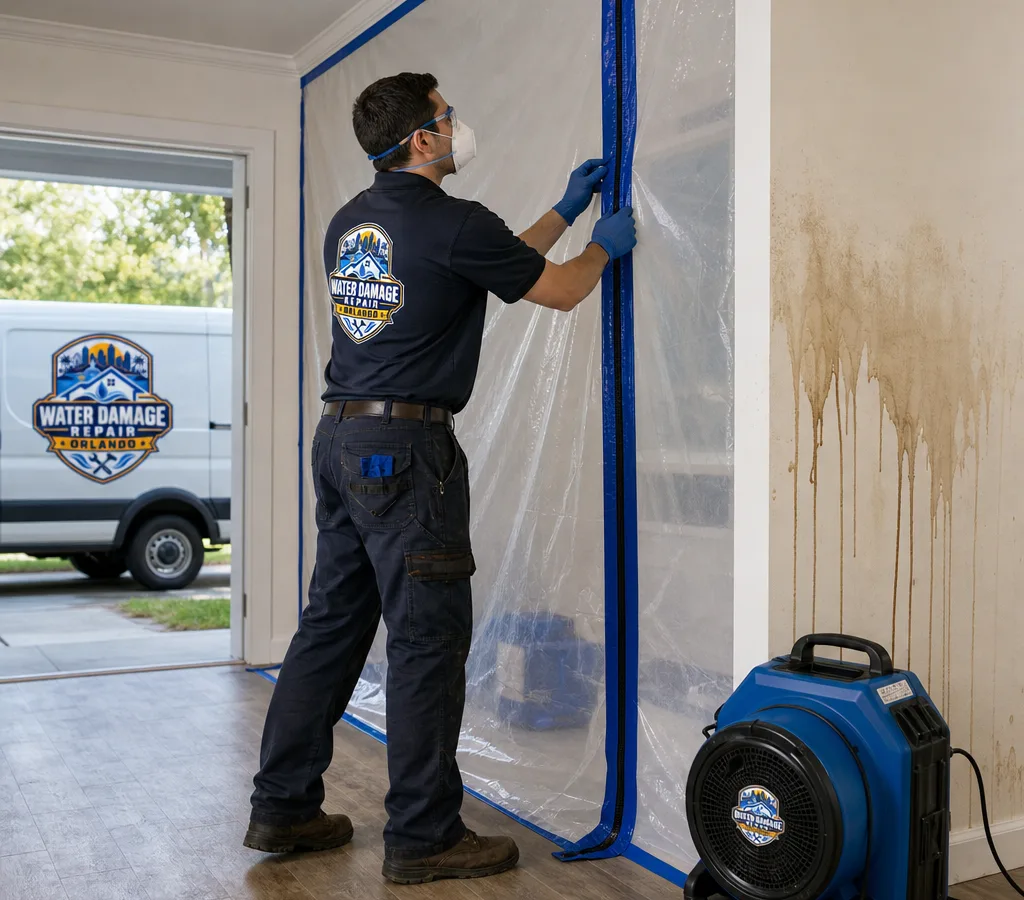
A safe mold job starts with controlling where air and dust can travel. We typically follow a step-by-step workflow built around IICRC-style remediation practices.
We look for visible growth, staining, elevated moisture, and likely pathways. We also identify materials that can be cleaned versus materials that usually require removal, such as porous drywall with visible mold.
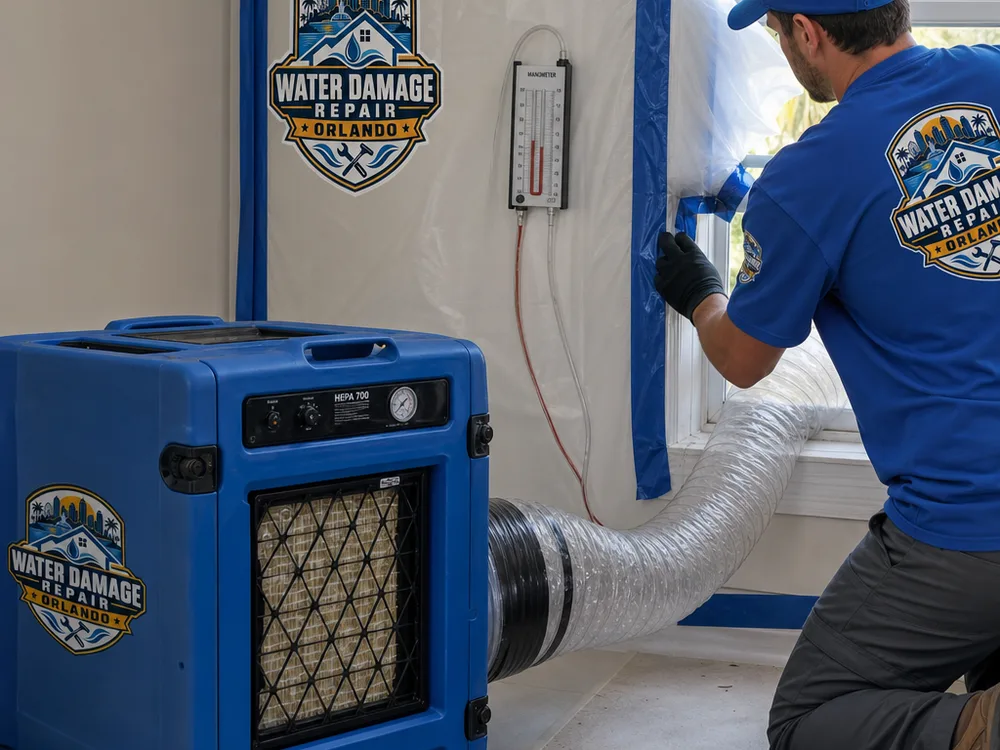
We isolate the affected area with poly sheeting and use negative air pressure with HEPA filtration when conditions call for it. This helps keep particles from drifting into adjacent rooms.
Mold comes back if moisture stays. We identify and address the active moisture problem—leaks, wet building materials, poor airflow, or humidity issues—and set drying targets for the space.
Depending on the materials involved, we may perform controlled demolition of impacted drywall, insulation, baseboards, or flooring. Remaining surfaces are cleaned using HEPA vacuuming and appropriate antimicrobial products.
We confirm the area is dry and visually clean, then leave the space ready for reconstruction. If you want the rebuild handled after remediation, we can outline that scope up front so timelines stay predictable.
A scope you can follow
We explain exactly what gets sealed off, how we manage airflow, and what rooms are affected so you can live and work around the project.
HEPA filtration and vacuuming are standard tools for reducing particulate spread during removal and cleanup, especially in occupied properties.
Non-porous materials can often be cleaned; porous materials with growth are often removed. We walk you through what is salvageable and why.
We focus on the moisture driver behind the mold, whether it is an active leak, trapped water, or an area that cannot dry properly.
You get a written scope of work and project notes that help with property records, tenants, or insurance conversations.
Built for Central Florida
In Orlando, mold behavior is closely tied to moisture and indoor humidity. Even when there is no dramatic flood, small damp zones can stay wet long enough to support growth.
A few local realities we plan for:
We also work across different building types. In Downtown high-rises and newer condos, access planning and containment logistics matter, including elevators, adjacent units, and limited staging. In areas with older housing stock like College Park, moisture pathways can be less predictable due to past repairs and layered materials. In Lake Nona and other fast-growing areas, the issue is often a single wet zone from a recent leak, where fast isolation prevents the scope from expanding.
Wherever you are in Orlando, the right first step is the same: locate moisture, isolate the area, and remove impacted materials safely.
Planning the work
Mold removal in Orlando typically ranges from about $750 to $6,000+, with small, contained cleanup jobs at the low end and larger remediation with demolition and multiple rooms at the high end. A single small area, such as a limited bathroom wall section, often lands around $1,000 to $2,500, while widespread growth behind finishes or in multiple zones can push higher.
Your final price depends on the size and location of the affected area, how much porous material must be removed, access in attics, crawlspaces, or behind cabinets, and what drying and containment are required. The exact cost is confirmed after an on-site inspection and written scope.
From first call to closeout
Share where the odor or staining is, whether there was a recent leak or overflow, and whether anyone has sensitivity concerns so we can plan the right containment level.
We assess the suspected area, check moisture, and outline what will be removed, what can be cleaned, and what needs drying before repairs.
We coordinate access, protect adjacent areas, and set expectations for noise, equipment, and any temporary room restrictions.
After removal and cleaning, we verify dry conditions and leave the space ready for reconstruction, paint, flooring, or cabinetry work as needed.
Answers before work begins
Most mold removal projects take 1 to 3 days for remediation, plus additional time if drying and repairs are needed. A small, contained area can sometimes be completed in a day, while jobs involving wall cavities, flooring removal, or multiple rooms often require extra drying time before reconstruction.
Not always, but it depends on the location and containment needs. If the work is isolated to one room with proper containment and negative air, many homeowners can stay elsewhere in the home; if the affected area is widespread or involves critical spaces like kitchens or main hallways, temporary relocation may be more practical.
Sometimes, yes, but only when the material is suitable and the growth is truly surface-level. Drywall and insulation are porous, so visible growth often means removal is the safest way to eliminate contamination; we confirm the best approach after checking moisture and how far the impact extends.
Mold typically returns when moisture is still present or keeps returning, such as an unrepaired leak, trapped water in building materials, or persistently high indoor humidity. In Orlando's climate, drying verification and correcting the moisture source are as important as the cleaning and removal steps.
We can discuss testing based on your situation, but remediation decisions are usually driven by moisture findings and visible impact. For many properties, identifying the wet materials, setting containment, and removing affected porous materials is more actionable than relying on a single air sample.
Coverage depends on your policy and the cause of loss. Mold related to a sudden, accidental water event is sometimes handled differently than mold from long-term seepage; we provide documentation and a written scope that can support the claims process if you decide to file.
Plan the work with confidence
If you suspect mold, the next step is a focused inspection with a plan for containment, removal, and drying. Share what happened and where the problem is showing up, and we will outline the safest path to get your Orlando property back to normal.