Rapid extraction and stabilization
We remove standing water, protect contents when possible, and set up a drying plan that targets the wettest areas first to reduce secondary damage.
Serving Orlando, Florida & surrounding areas
24/7 Emergency Response
About Water Damage Repair Orlando
We help Orlando property owners move from urgent water damage to a clear recovery plan through responsive inspections, measured drying, careful restoration, and straightforward communication.
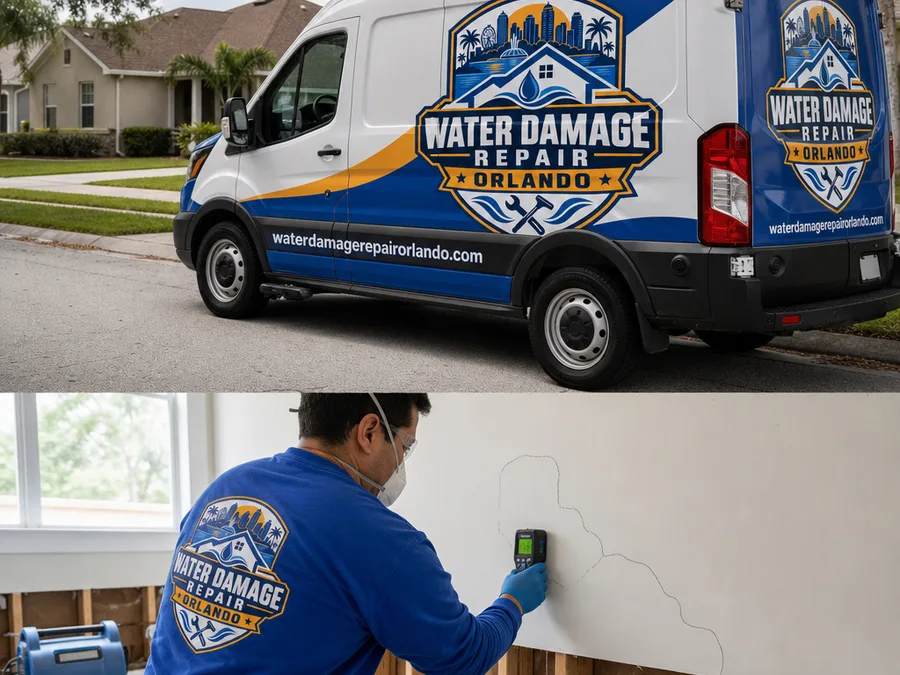
Fast extraction, controlled drying, and accurate moisture checks help stop water from becoming a larger repair.
Local restoration, practical guidance
Water Damage Repair Orlando is a local restoration resource for homeowners, property managers, and businesses dealing with water damage in Orlando, Florida. Our work is organized around a simple goal: understand where the water traveled, stabilize the property, and explain the drying and repair decisions in plain language.
We provide water damage services in Orlando, FL, including ZIP 32812 and surrounding areas, for residential and commercial spaces. Because Central Florida humidity can slow evaporation, our team relies on moisture mapping, controlled airflow, dehumidification, and follow-up readings rather than surface appearance alone.
From the first inspection through restoration planning, we focus on protecting materials that can be saved, limiting unnecessary demolition, documenting affected areas, and giving customers a practical scope they can follow. That measured approach guides every Orlando water damage project we take on.
How we work
We remove standing water, protect contents when possible, and set up a drying plan that targets the wettest areas first to reduce secondary damage.
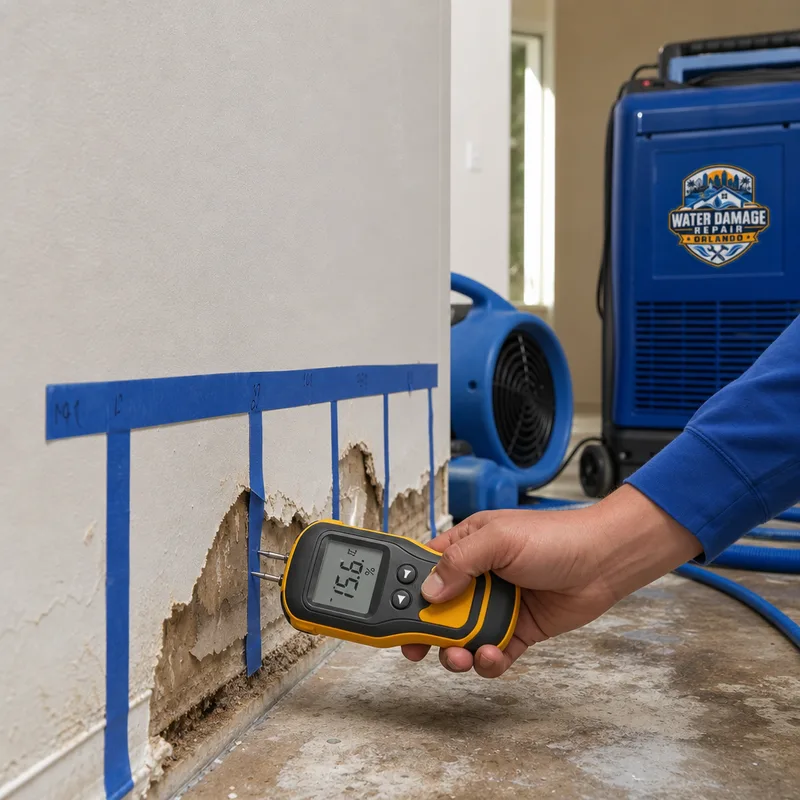
We use non-invasive moisture checks and targeted readings to confirm what is actually wet, then track progress so drying is based on measurements, not guesswork.
Drywall, insulation, wood trim, engineered flooring, and cabinets all behave differently. We explain what can be dried in place and what typically needs removal.
When wet materials must come out, we isolate the work area and remove only what is required for proper drying and safe rebuilding.
You get a written scope that ties the water source to the affected areas, the drying approach, and the repair steps that put the property back into service.
Local knowledge on every inspection
Orlando water damage often comes from everyday failures rather than dramatic events: supply line leaks under sinks, toilet seals, water heater failures, HVAC condensate drain issues, roof leaks, and water intrusion around windows or doors. In multi-story homes and many condos, gravity turns a small upstairs leak into a ceiling and wall issue below.
During the initial assessment, we prioritize three things:
Source and category of water. Clean water from a supply line is handled differently than water that may contain contaminants, such as from a drain backup. This affects cleaning steps, disposal, and what materials can be saved.
Where the water traveled. Water can move under baseboards and flooring or follow framing and plumbing penetrations. We check adjacent rooms, closets, and shared walls so drying is complete.
What is at risk if we wait. Swelling in wood products, delamination in engineered materials, staining, and microbial growth become more likely the longer moisture stays trapped. Early extraction and controlled airflow typically reduce the amount of demolition needed.
Our team handles urgent situations and inspections across Orlando with a plan built around the source, the affected materials, and the actual moisture readings found on site.
Our approach in action
We identify the source, check for safety issues, and recommend immediate steps such as shutting off water, limiting foot traffic on wet flooring, and protecting nearby contents.
We measure and map affected areas, then explain what can be dried, what should be removed, and what the drying equipment setup will look like.
Standing water is removed with professional extraction tools. This is often the single biggest step to shorten drying time and reduce warping and swelling.
We place air movers and dehumidifiers based on the building layout and moisture readings. Drying is monitored and adjusted as conditions change.
If water contacted soil, waste, or other contaminants, we add cleaning and antimicrobial steps appropriate to the situation and the affected materials.
After drying goals are met, we outline the repair scope—drywall, trim, paint, flooring, and cabinetry as applicable—so the property can be put back into normal use.
Transparent restoration planning
Most water damage repair in Orlando typically ranges from about $900 to $6,500+, depending on how far the water spread, how long materials stayed wet, and whether demolition and rebuilding are required. A small, localized leak with limited drying may be at the low end, while multi-room damage, saturated flooring, and cabinet or drywall replacement can push costs higher.
Final pricing depends on category of water, equipment days for air movers and dehumidifiers, affected materials such as drywall, insulation, and flooring, access, and what must be removed to dry the structure correctly. The exact cost is confirmed after an on-site inspection and moisture mapping.
Proud to serve Central Florida
Water damage work changes based on building type and how water moves through it. In areas with more condos and multi-story buildings, leaks can affect multiple units and shared assemblies, so documentation and coordination matter as much as drying. In single-family neighborhoods, slab-on-grade construction and common flooring choices can shift the plan toward perimeter checks, baseboard removal, and targeted drying along exterior walls.
We routinely handle water damage in Orlando neighborhoods such as:
If your situation includes flooding beyond a localized leak, the cleanup plan may also involve safe disposal of damaged porous materials, deeper cleaning steps, and a more detailed rebuild scope.
Request Emergency ServiceAnswers before work begins
You should treat water damage as urgent and get drying started as soon as it is safe because Orlando's humidity can slow natural drying and trapped moisture can spread into drywall, trim, and flooring. Even when standing water is gone, wet cavities and underlayment can stay saturated without professional airflow and dehumidification.
Drywall removal depends on how high the moisture traveled, how long it stayed wet, and the type of water involved. Small clean-water wetting may be dried with targeted airflow and monitoring, but swollen drywall, wet insulation, or contaminated water typically requires removal to dry the structure properly.
Drying should be confirmed with moisture measurements taken at the same materials and locations over time, not by touch or surface appearance. We use moisture mapping and follow-up readings to verify progress in walls, base areas, and flooring edges where water often lingers.
Sometimes, yes, but it depends on the flooring type and how long it was wet. Solid hardwood may be salvageable with controlled drying in some cases, while engineered wood, laminate, and some floating floors can delaminate or swell and may require removal to prevent long-term damage.
If it is safe, stop the water source, shut off power to affected areas if there is any risk of electrical contact, and move small valuables or electronics out of wet zones. Avoid running central HVAC if water is near returns, and avoid pulling up flooring or opening walls unless directed, since that can spread contamination or complicate drying plans.
We can provide documentation of moisture conditions, affected materials, and the restoration scope that is typically needed for a claim review. Coverage depends on your policy and the cause of loss, so it is best to report the incident promptly and keep records of when the damage was discovered and what steps were taken to prevent further damage.
Start drying with a clear plan
Tell us what happened, what areas are wet, and whether the water source is still active. We will schedule an on-site assessment, map the moisture, and give you a clear plan for drying and repairs.