A written scope before demolition
You should know what areas are included, what materials are likely to be removed, and how the space will be protected before work starts.
Serving Orlando, Florida & surrounding areas
24/7 Emergency Response
Mold remediation in Orlando
If you smell a musty odor, see staining, or have had leaks or humidity issues, our team can inspect, contain, remove, and clean up mold with a clear written scope and step-by-step plan.
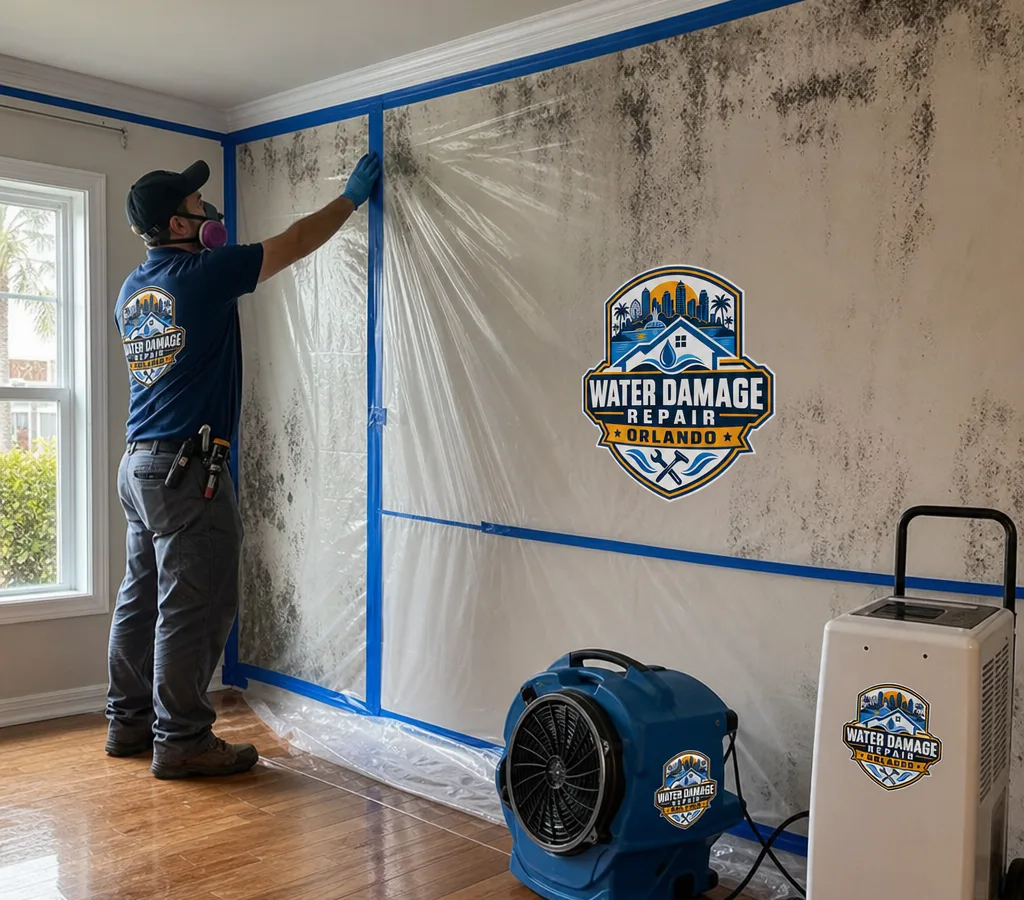
Effective remediation controls the work area, removes active growth and addresses the moisture conditions that allowed it to develop.
Understand the scope
Orlando mold remediation is the controlled process of finding mold growth, stopping cross-contamination, removing affected materials when needed, and cleaning remaining surfaces so the area can be safely rebuilt or reoccupied.
A real remediation plan starts with the moisture problem and the building materials involved. In Central Florida, indoor humidity and intermittent leaks can feed growth behind drywall, under baseboards, inside cabinetry toe-kicks, around supply boots, and in attics when ventilation is poor. The work is different for a small, contained patch on a bathroom ceiling than it is for hidden growth in a wall cavity or around HVAC components.
What remediation does not include by default is a guarantee that mold will never return. Mold spores are normal in outdoor air and can enter any home or business. The goal is to remove active growth and contaminated porous materials, clean what can be cleaned, and correct the conditions that let mold amplify indoors. If you want help with the related moisture source after remediation, start with our team at Water Damage Repair Orlando FL so the plan accounts for how the building got wet in the first place.
Controlled on-site work
We treat every project as a contamination-control job, not a quick surface wipe. That means documenting conditions, isolating the work area, and using the right methods for each material.
Typical scope elements include:
For properties near lakes or in low-lying areas around Orlando, a single wetting event can migrate farther than it looks on the surface. We focus on building assemblies—wall cavities, floor systems, and ceiling voids—not just what you can see.
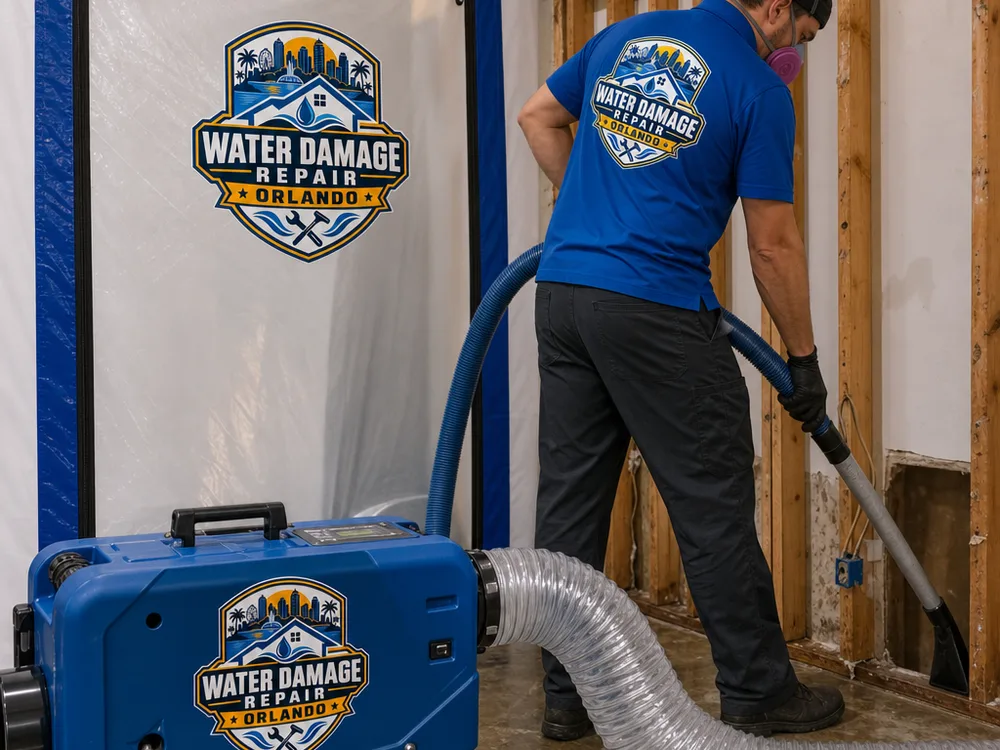
A scope you can follow
You should know what areas are included, what materials are likely to be removed, and how the space will be protected before work starts.
Apartments, older homes with multiple returns, and open-plan commercial suites all handle airflow differently. The containment plan follows the building, not a one-size template.
Porous and semi-porous materials—drywall, insulation, and some wood products—often need removal when growth is established, while many non-porous surfaces can be cleaned.
We explain what needs to happen after remediation, such as drying targets, re-testing options if you choose them, and what a rebuild handoff looks like.
If you're living or working in the property, we discuss access, scheduling, and how to limit disruption while still doing proper containment and cleanup.
Planning the work
Orlando mold remediation typically ranges from about $1,500 to $6,500 for many residential jobs, while larger or multi-room projects can run $7,500 to $20,000+ depending on how much material must be removed and how complex containment needs to be. A small, accessible area with limited removal costs less than hidden growth that requires opening walls, removing insulation, and running multiple air scrubbers.
Final pricing depends on the affected square footage, where the mold is located—attic, crawlspace, or wall cavity—how many containment zones are required, the amount of demolition and disposal, and whether active drying and dehumidification are needed. The exact cost is confirmed after an on-site inspection and a written scope.
From inspection to closeout
We walk the affected areas, ask about recent leaks and HVAC issues, and look for likely moisture sources. We also discuss occupants who may be sensitive to dust and odors so the work plan fits the situation.
You get a clear scope for what is in and out. Then we set up containment, establish controlled entry, and stage HEPA filtration and equipment.
We remove contaminated porous materials when required and address the conditions that let mold grow. If a separate repair trade is needed, we coordinate the handoff so the remediation stays intact.
After removal, remaining structures are HEPA vacuumed and physically cleaned. The goal is to remove residue and settled spores, not to mask the problem with fragrance or paint.
When moisture is involved, we dry the area with dehumidification and air movement as appropriate. We review the completed work area with you and document what was done so you can move forward with rebuilding confidently.
Containment in practice
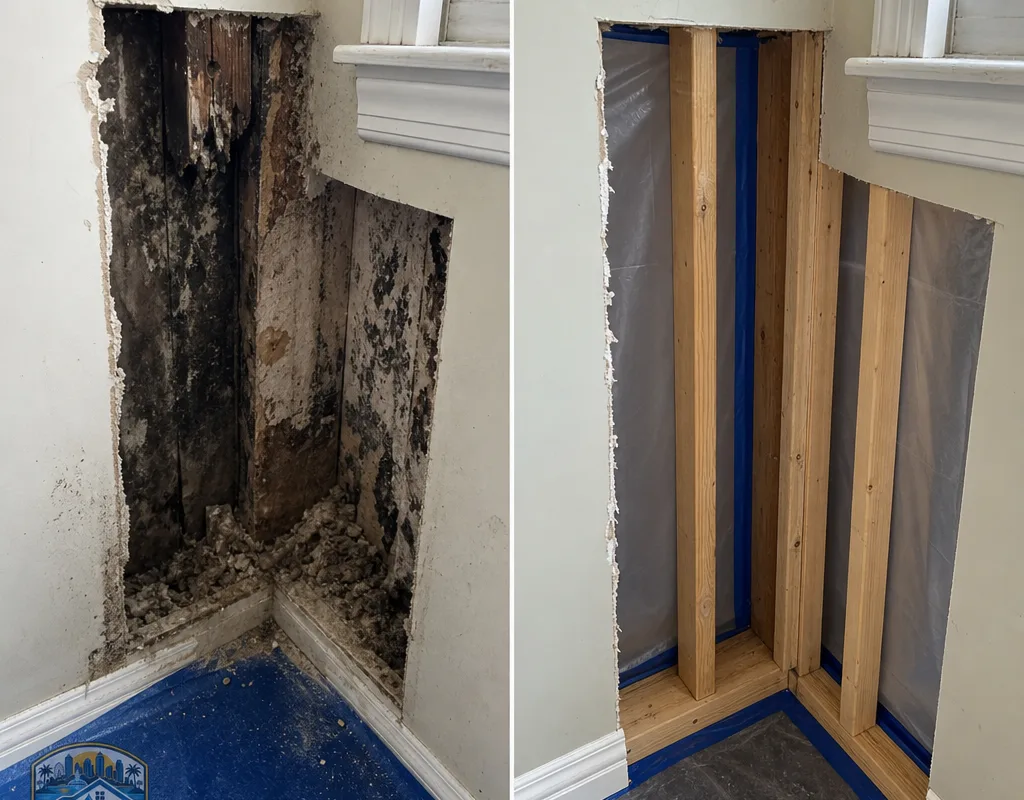
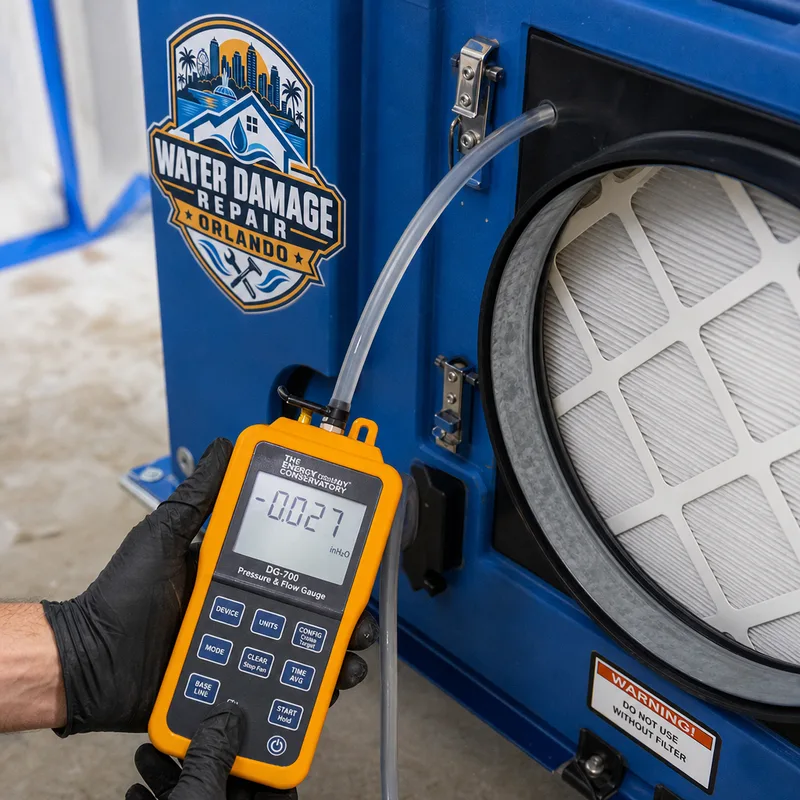
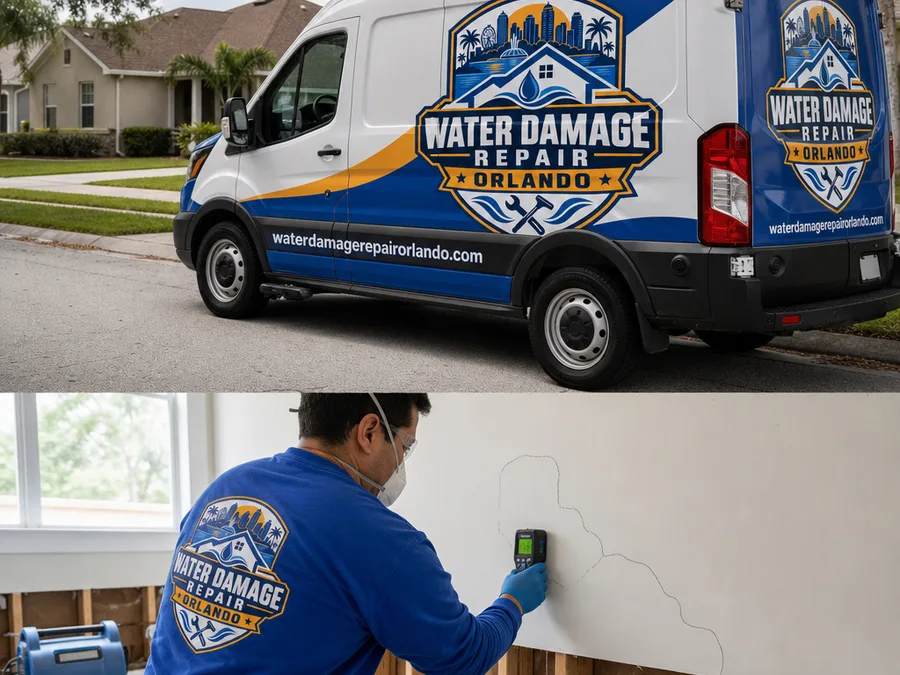
If you suspect mold, don't wait for it to spread into adjacent materials. Get an inspection, a written scope, and a containment plan that fits your property before any demo starts.
Call for Emergency HelpAnswers before work begins
Start time depends on the size of the affected area and whether immediate containment is needed, but many projects can begin quickly after an inspection and written scope are approved. In Orlando, humidity and ongoing HVAC use can keep damp materials from drying on their own, so earlier containment and drying often reduces how far the problem travels into walls, flooring, or insulation.
Drywall often has to be removed when mold is established on the back side or inside the paper facing, because it is porous and hard to clean completely. If staining is only on the paint surface and the drywall is dry and structurally sound, cleaning may be possible, but the decision should follow inspection of the cavity, nearby baseboards, and any signs of moisture.
It can be, as long as the work is properly contained and access is managed, but some situations call for staying out of the work zone or temporarily relocating during the dirtiest phases. A good plan uses poly containment, controlled entry, and HEPA filtration to limit airborne spread, and it also considers where your HVAC returns are so the system doesn't pull air from the work area.
Often yes, but it depends on where the mold is and how the air handler and returns are located. If the work area connects to the HVAC return path, we may recommend adjusting operation or isolating ducts to avoid distributing particulate. In Orlando's climate, maintaining reasonable indoor humidity during and after the project is part of preventing regrowth.
Many commercial remediation projects are scheduled around tenant hours to reduce disruption, especially when containment affects walkways, entrances, or shared corridors. The best approach is to review access points, noise constraints, and any building rules up front so the containment and bag-out plan works with the property's operations.
The biggest cost drivers are how many square feet are affected, whether the mold is hidden in wall cavities, under floors, or in attic insulation, how many containment zones are needed, and how much demolition and disposal is required. In humid conditions, active drying and dehumidification can also add equipment time, but it is often necessary when materials are damp.
Clearance testing is optional, but it is a common choice when you want third-party confirmation before rebuilding, selling, or reoccupying sensitive spaces. If you choose testing, it should happen after the cleaning is complete and the area is dry, and the sampling plan should match the containment boundaries so results are meaningful.
Plan the work with confidence
Tell us what you're seeing and what areas are affected. We'll schedule an inspection, explain containment and cleanup options, and provide a written plan you can make decisions from.