Source control and safety first
We help confirm the water is stopped and check for electrical and slip hazards before equipment is set. If the water is contaminated, we treat the area as a controlled work zone.
Serving Orlando, Florida & surrounding areas
24/7 Emergency Response
Water damage cleanup in Orlando
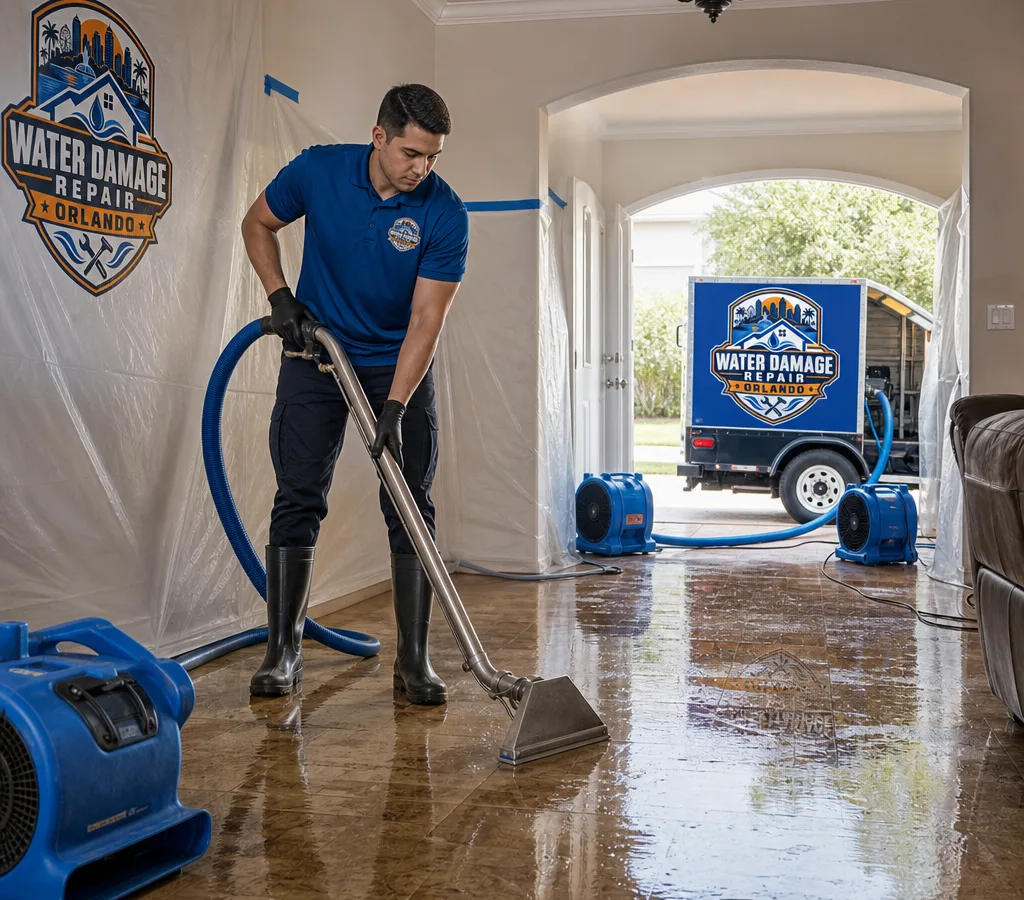
When water gets into drywall, flooring, or cabinets, the clock starts. Our local team responds fast, removes standing water, sets professional drying equipment, and documents the job so you can make clear decisions about repairs and insurance.
Act before moisture spreads
If you are searching for water damage cleanup Orlando, you likely need two things right away: the water removed and the building dried before moisture spreads into materials you cannot see. Water Damage Repair Orlando handles the full cleanup sequence, from initial safety checks to extraction, drying, and detailed moisture readings.
In Orlando, water events often turn into bigger problems because high humidity slows evaporation and can keep wall cavities damp if drying is not controlled. That is why we treat cleanup as a measured process, not just a quick vacuum and a few fans. We locate where water traveled, isolate affected areas when needed, and dry to verified targets so you can move forward with confidence.
We work across Orlando (ZIP 32812 and nearby areas) for:
If you are also comparing providers, you can get a quick sense of how our team approaches documentation and scope on the Water Damage Repair Orlando FL overview.
Complete cleanup scope
We help confirm the water is stopped and check for electrical and slip hazards before equipment is set. If the water is contaminated, we treat the area as a controlled work zone.
Removing standing water is step one. The real time saver is rapid, targeted drying with air movers and dehumidifiers placed based on moisture readings, not guesswork.
We measure moisture in drywall, framing, and flooring to find the full footprint of the loss. Readings and photos support clear decisions and help with insurance conversations.
Some materials cannot be dried safely once soaked, including certain drywall, insulation, and swollen baseboards. We remove only what is necessary to open wet cavities and dry thoroughly.
Lingering moisture drives odors and can lead to microbial growth. We focus on drying to completion and cleaning affected surfaces using industry-appropriate methods.
When drying is complete, we outline what can be restored and what needs replacement, so you can plan repairs and avoid rework.
Find the full wet footprint
Water rarely stays where you first see it. In many Orlando homes, it wicks under baseboards, travels beneath flooring, or runs along framing to the next room. Tile and slab construction can disguise trapped moisture, and carpets can hold a surprising amount of water even after the surface looks dry.
We routinely check and document common concealment zones:
Neighborhood layouts can change the way water enters and spreads. Downtown Orlando and Thornton Park have many condos and older multi-story buildings where leaks can affect units below, so fast documentation and coordination matters. Lake Nona and parts of Avalon Park have newer construction where water can move quickly through open-plan layouts and engineered materials. Areas near Conway and Belle Isle often have a mix of housing ages and remodels, so we pay close attention to transitions between old and new materials and any prior water damage.
If the situation involves contaminated water, such as a sewage backup, the cleanup requirements and disposal steps are different. We will explain the category of water present and what that means for what can be saved.
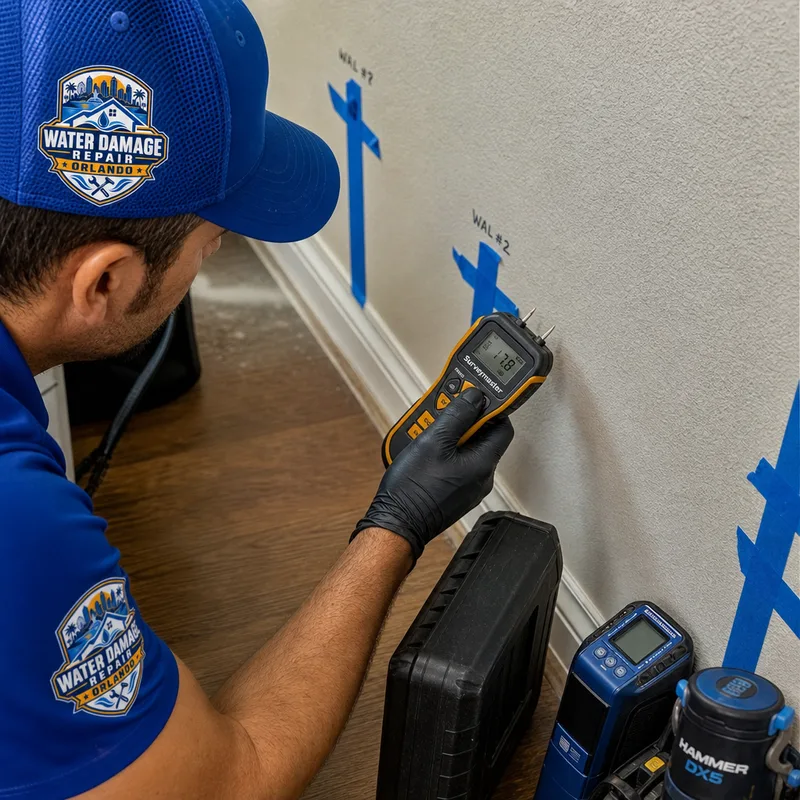
We identify the source area, document visible damage, and use moisture meters to trace the wet footprint into adjacent rooms and wall cavities.
We extract standing water, pull up saturated materials when necessary, and set containment if there is a risk of spreading contamination or dust.
Air movers and dehumidifiers are placed based on psychrometrics, including temperature, humidity, and material moisture. We adjust placement as the structure dries.
We clean affected surfaces and contents that are safe to save. For Category 2 or 3 water, we follow stricter cleaning and removal protocols.
We confirm drying with final readings and provide a clear scope of what is ready for repair or rebuild, including documentation that supports the claim file if insurance is involved.
Planning the work
Water damage cleanup in Orlando typically ranges from $500 to $3,500 for smaller, contained losses, while larger projects with significant demolition, specialty drying, or contamination can run $4,000 to $12,000+.
Your final price depends on the amount of standing water, how far moisture spread, including hidden cavities, the type of water, materials affected, access for equipment, and how long drying and monitoring take. The exact cost is confirmed after an on-site inspection and moisture mapping.
Answers before cleanup begins
Start cleanup immediately, because water can soak into drywall, flooring, and cabinets within hours and becomes harder to dry in Orlando's humidity. If you cannot get a crew on-site right away, shut off the water source, avoid using electrical outlets in wet areas, and move small valuables out of the affected zone if it is safe.
Yes, we handle water damage cleanup for homes, condos, offices, and light commercial spaces around Orlando. Commercial jobs often need faster containment, after-hours scheduling, and clearer documentation for property managers, and we plan the work to minimize downtime where possible.
In practice, water mitigation and water damage cleanup refer to the same core work: stopping further damage through extraction, drying, and controlled removal of unsalvageable materials. The key is that the work is verified with moisture readings, not just by how the surface looks.
Some drywall can be dried if it is not severely swollen, not contaminated, and the wall cavity can be dried effectively, but insulation often needs removal once saturated. We determine this by the water category, the extent of saturation, and moisture readings taken over time.
Storm-related losses usually involve water intrusion paths that must be identified, such as around doors, windows, or roof penetrations, and wet materials can extend beyond the visible puddle line. We focus on drying and documentation first, then you can address the building envelope repair so the problem does not repeat during the next storm.
Yes, we can provide photos, moisture logs, and a clear scope so the adjuster can see what was affected and what work was necessary. Coverage depends on your policy and the cause of loss, but good documentation helps reduce delays and disputes.
If you have wet floors, damp drywall, or a musty smell after a leak, the safest next step is a same-day inspection and moisture map so you know what needs drying, what needs removal, and what can be saved.
Call for Emergency HelpStart drying with a clear plan
Tell us what happened and where the water is showing. We will respond quickly, explain the cleanup plan in plain terms, and start drying with measured targets so your property can move toward repair.